Share Clyde E. Robbins's obituary with others.
Invite friends and family to read the obituary and add memories.
Stay updated
We'll notify you when service details or new memories are added.
You're now following this obituary
We'll email you when there are updates.
Select your format and elements to print

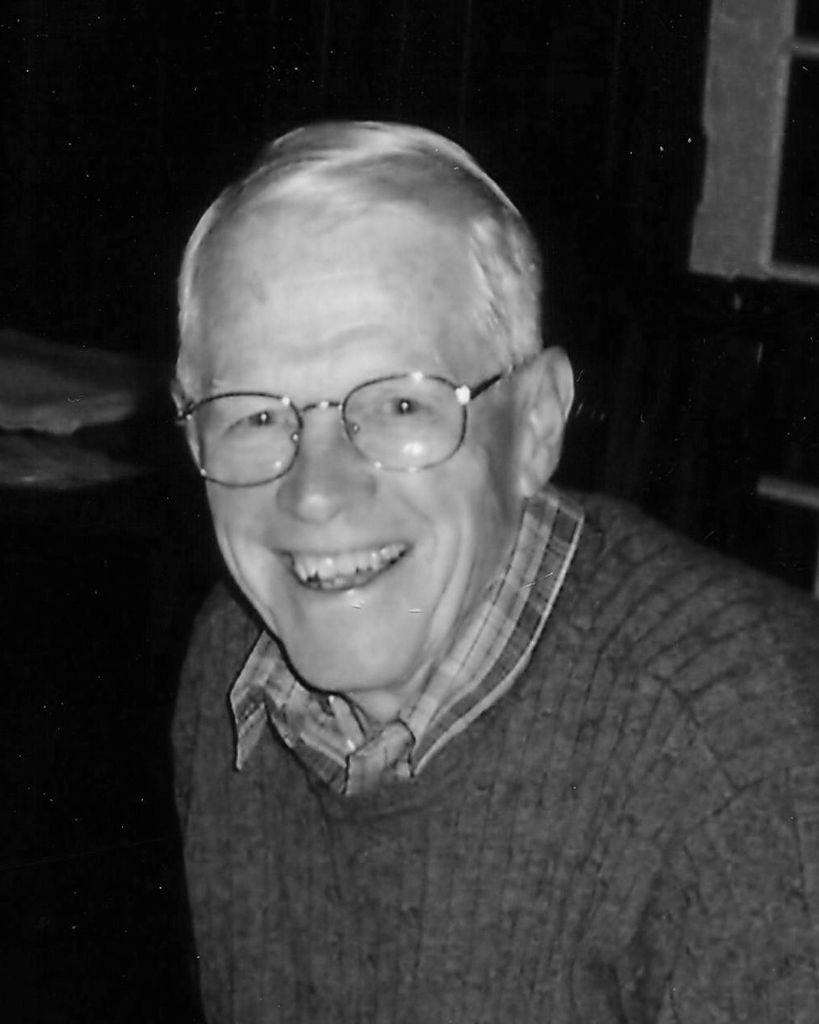


Clyde E. Robbins
Apr 24, 1931 — Aug 16, 2026
Vice Admiral Clyde E Robbins, US Coast Guard, passed away at his home in Troy, Pennsylvania on August 16, 2026. He was 95 years old, born April 24, 1931 in Columbia Cross Roads, PA.
Growing up in Col X Rds with his identical twin Lee and the rest of the Cross Roads gang was a source of great stories, including trying to blow up the iron mine and filling the church with the smell of urine on Sunday morning due to an injudicious choice of where to relieve oneself. Life in Cross Roads included playing baseball, building airplane models and generally getting into trouble. The highlight for the twins occurred on a snowy evening in 1942 when a J3 Piper Cub was forced down into the pasture behind their house while being ferried to Elmira. For a couple of 11-year-olds, this was clearly a sign from above. Their first flights were at age 12 and both soloed at 17, fighting over who got to fly the Cub with the Franklin engine.
Clyde and Lee were nearly indistinguishable as teenagers and would not think twice about attending class for each other or even switching partners halfway through a date. For the early part of their lives they considered themselves interchangeable as did most of those around them. They were both constant flirts and their family members mostly thought they were a pain in the ass.
Aviation gave focus and inspiration to their lives. After high school they briefly attended University of Michigan, having been told that at least two years of college were required to be a pilot. The financial burden proved too much and while on break they saw a poster advertising the Coast Guard Academy. To these two, the best kind of college was free college, so both applied to the Coast Guard Academy, but only Clyde was accepted. The two of them would no longer be fused at the hip. While it was a very difficult transition, both would become tremendously successful.
Clyde’s time at the Academy was marked by overwhelming mediocrity, graduating in about the middle of his class. He was a devoted member of what he called the Radiator Club — guys who took naps in the afternoon rather than take on the rigorous activities of varsity athletics. But the stats don’t tell the story. His natural leadership instincts, decisiveness, affability, and drive to do something worthwhile developed during his time at the institution.
His first duty station landed him in New York City which facilitated the rekindling of a relationship with Elizabeth (Betty) Byrem, a nutritionist at New York’s Presbyterian Hospital. After attending Naval flight training he was assigned to fly PBMs and P5Ms at Coast Guard Air Facility Bermuda. Pretty tough duty. Betty had sworn to never marry a military man or a pilot, but such was Clyde’s charm that she was stuck with both. They got married before arriving in Bermuda and enjoyed a mutually supportive, lifelong relationship that endured until Betty died in 2007.
While in Bermuda, Clyde and his crew experienced an engine failure while over open water. Unable to continue on a single engine, they ditched their PBM more than 50 miles offshore. Offshore ditching is dicey, even in a flying boat, and they were fortunate that the seas were favorable. They water taxied their aircraft for many hours, covering the 50-mile distance back to Bermuda. He also was called upon to escort into Bermuda a U-2, whose pilot had run out of oxygen. This was in 1958 before the existence of the U-2 had been divulged, and the whole crew was sworn to secrecy.
Subsequent aviation duty stations included St Petersburg, Florida, where daughter Jennifer (Bettiann Young) and son James (Nancy) were born, as well as Argentia, Newfoundland, and San Francisco. In San Francisco he was awarded an Air Medal for the front page rescue of several people off a disabled vessel moments before it was dashed against the rocks at the base of a cliff. The weather was so poor he had to fly underneath the Golden Gate Bridge in order to reach the location of the distressed boaters.
Later in his career, he would get the unlikely assignment of Captain of the Port/Group Commander in Galveston, Texas, taking him out of his area of expertise. He rose to the challenge, fighting a major oil tanker fire (M/V Gloptic Sun) and a large-scale cotton fire in the Port of Galveston that persisted for months. While conducting a port tour for dignitaries pier side, one of the individuals fell into the water and struck his head on an underwater obstruction many feet below. Clyde immediately jumped in after him and rendered life-saving assistance.
Clyde and Betty’s fondest memories came from Clyde’s tours of duty in Hawaii, as Commander of the Coast Guard’s 14th District, and San Francisco, where Clyde was Coast Guard Pacific Area Commander. Gifts from their many travels adorned their household for years as reminders of the wonderful personal relationships they built during those years. Many friends and family members took advantage of Clyde and Betty’s posting in Hawaii. While there, they were almost never without visiting guests.
The peak of Clyde’s career was his role as Federal On-Scene Coordinator for the cleanup of the Exxon Valdez oil spill. The Valdez Oil Spill was an unprecedented, seminal event that seemed to spell both economic and environmental disaster for a large part of Alaska. Clyde was eminently well suited for this endeavor, uniting disparate concerns and forging new solutions to difficult problems with tricky public perception issues. Clyde managed an endless stream of evolving problems with aplomb and engendered unwavering support from all the many entities involved, including those that were oppositional to one another. In the end, everyone agreed to follow Clyde’s lead and credited him with pulling the enterprise together. Clyde’s expertise and opinion were sought in many oil spills that followed the Exxon Valdez disaster.
After his tour as Pacific Area Commander, Clyde planned to retire, but the first Bush administration had other plans. After the bombing of Pan Am 107, the administration wanted to establish a security and intelligence entity within the Department of Transportation to oversee transportation security and evaluate threats. Clyde’s Exxon Valdez efforts shined the administration’s image and they wanted him to work his magic in establishing this new office, which ultimately would be transformed into TSA. Clyde’s sense of duty drove him to agree to delay his retirement and serve four more years. While not his favorite assignment, he was glad to complete it without any additional transportation disasters.
In 1993, Clyde retired and returned to Bradford County, Pennsylvania, where he was finally able to pursue the things he loved most. He and his brother Lee combined forces to rebuild a number of aircraft including a 1947 J3 Cub reminiscent of their early days of flying. He contributed a great deal of time, expertise and leadership to the community, serving on the Troy school board where he was central to putting in place a teacher’s contract that respected teachers while meeting school district needs. He was chairman of the county airport board where he led efforts for many airport upgrades. He served on the board of directors for several companies, and along with Lee and others in EAA Chapter 533, worked to introduce many young people to the intrigue of flight hoping to inspire others the way he and Lee were inspired as kids (though perhaps a bit less dramatically).
Clyde was a little famous for his incurable use of down-home phrases. He wasn’t purposely trying to project a folksy image, he just couldn’t help it. He would use “crick” for creek, and “peekuns” for pecans. He called screws “screw-nails,” flip-flops were “go-aheads,” and no one ever figured out what he meant by the term “bicycle pliers.” Betty, a very intelligent and well-educated woman, tried to cure him, but he would always revert to his old ways. Hopefully, wherever he is now, someone is able to hand him the bicycle pliers.
For the genealogists, Clyde’s parents were Howard and Lisle (Leonard) Robbins. His only surviving sibling is Jeanne (Joel) Parker. His adored grandchildren are John-Michael Cross (Gillian Maguire), Joshua (Andrea) Cross, Benjamin and Samuel Robbins, Iris and Isabelle Hills and two great-grandchildren, Caroline and Wesley Maguire.
A memorial service will be held at 1:00 PM on the 11th of October 2026 at the Robbins Farm Airport. In lieu of flowers, think of Clyde while you enjoy a good meal, look up at the vast blue sky, or give someone a much-needed helping hand.
The Gerald W. Vickery, Jr. Funeral and Cremation Services, Inc. Troy, PA is in charge of arrangements. Send condolences at vickeryfuneralhome.com.
Service Schedule
Upcoming Services
Memorial Service
Robbins Farm Airport
Guestbook
Visits: 1932
This site is protected by reCAPTCHA and the
Google Privacy Policy and Terms of Service apply.
Service map data © OpenStreetMap contributors